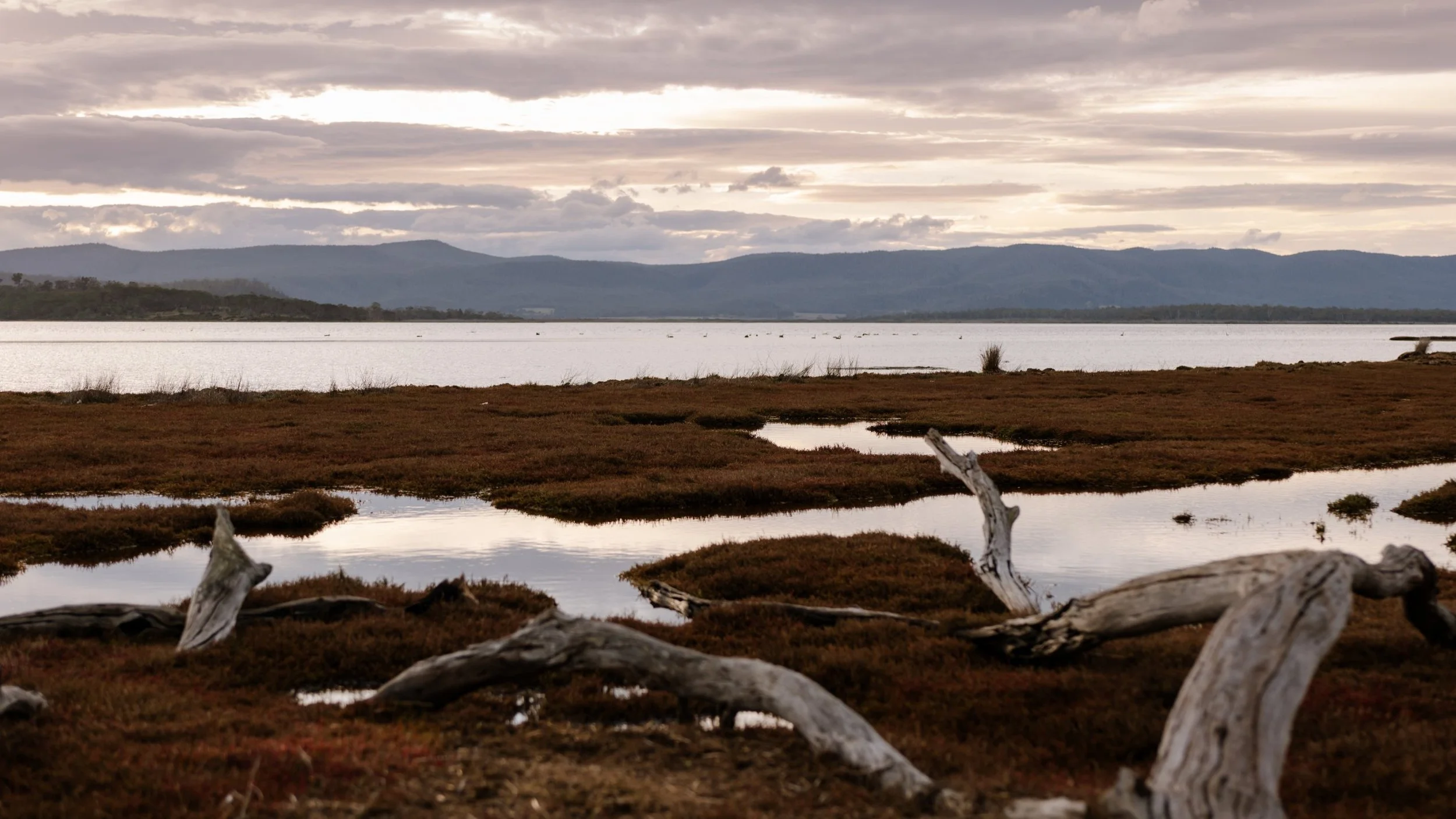
Where the sea-eagles hunt past your deck
Thousands of Black Swans on a Ramsar wetland. White-bellied Sea-Eagles and Wedge-tailed Eagles overhead. And you, watching it all from your private deck on Moulting Lagoon.
7,055 birds. One winter morning.
On a single July morning in 2024, the Moulting Lagoon bird count recorded 43 species, including 4,020 Black Swans, 7 White-bellied Sea-Eagles and 6 Wedge-tailed Eagles. Listed under the Ramsar Convention since 1982 and recognised as an Important Bird Area, the lagoon regularly holds more than 1% of the world's Black Swans and Pied Oystercatchers. And it is right in front of your retreat.
From your deck at first light


Bar-tailed Godwits, Common Greenshank and the endangered Eastern Curlew fly in from the Northern Hemisphere each spring, with numbers peaking in February.
The Long-Haul Waders
The Shoreline
Pied Oystercatchers, Great Egrets, pelicans and grebes work the shallows, a short walk from your retreat. Come at low tide, when the flats are busiest.


More than 1% of the world’s Black Swans gather on Moulting Lagoon. They nest through late winter, and the cygnets hatch across the water in early spring.
The Eagles
White-bellied Sea-Eagles nest on the lagoon and patrol the water. Wedge-tailed Eagles ride the thermals over the hills. Seven sea-eagles and six wedgies were counted on one July morning.
Thousands of Swans


"Around 120 Chestnut Teal, off Kittys Mistake."
Moulting Lagoon shorebird survey, January 2014
Kitty's Mistake is the spot out the front of the estate that gives our wine its name. The teal are still there. So is the wine, poured by the glass at our cellar door, a short walk from your retreat.
The birding year on the lagoon
WINTER · MID-JUNE TO AUGUST
Black Swans begin nesting across the lagoon, with egg-laying peaking in August. Double-banded Plovers arrive from New Zealand to winter on Tasmanian shores. Crisp, still mornings, low golden light and a fire waiting at WADE.
EARLY SPRING · SEPTEMBER
Cygnets hatch across the water and the first migratory waders begin to arrive. White-bellied Sea-Eagles hunt over the lagoon. One of our favourite times on the water.
SPRING AND SUMMER · OCTOBER TO FEBRUARY
Migratory shorebirds from the Northern Hemisphere build through summer, peaking in February. Pied Oystercatchers and Red-capped Plovers breed along the shoreline, and the sea-eagles hunt over the water at dusk.
For the serious birder
Your patch. The lagoon is right in front of every retreat, and you can walk straight down to the water's edge exclusive to our guests. Work the flats at low tide, when the waders are feeding.
Bring your own optics. Each retreat has a pair of binoculars for casual viewing, but serious birders will want their own binoculars and a spotting scope. The lagoon is broad and birds can sit well out on the water, and your private deck makes a steady, sheltered platform.
First light. Coffee is in your retreat for the dawn session. WADE serves breakfast from 7am, a short walk away, so there is no need to get back in the car.
Log it. We keep regular eBird checklists from the estate and love hearing what our guests have found.
Bird with care. Moulting Lagoon is a protected wetland and breeding ground. Please keep your distance from nesting swans and shorebirds and let the scope do the work.
Birding Stays
We are planning a small number of special birding stays on the lagoon: guided dawn walks along our shoreline, a bird photography weekend with a guest photographer, and stays timed to the swans' nesting season. Places are limited to our eight retreats.
Register your interest and you will be the first to hear when dates are announced.
Questions birders ask
-
Yes. Moulting Lagoon is a Ramsar-listed wetland and an Important Bird Area on Tasmania’s East Coast, near Coles Bay and Freycinet National Park. It regularly supports more than 1% of the world’s Black Swans and Pied Oystercatchers, Tasmania’s largest flock of Common Greenshank, White-bellied Sea-Eagles and Wedge-tailed Eagles, and migratory waders in summer. A July 2024 count recorded 43 species in a single morning.
-
Wineglass Bay Estate sits on the shore of Moulting Lagoon on Coles Bay Road, with eight luxury adults-only retreats looking straight across the water. You can birdwatch from your private deck or walk down to the lagoon edge, then walk to breakfast or dinner at WADE, our restaurant on the estate.
-
Black Swans are on Moulting Lagoon year-round, with thousands counted even in the depths of winter. They nest through late winter, with egg-laying peaking in August, and the cygnets hatch across the lagoon in early spring, around September.
-
Yes. White-bellied Sea-Eagles nest on the lagoon and hunt over the water, and Wedge-tailed Eagles are often seen over the surrounding hills. The July 2024 lagoon count recorded seven White-bellied Sea-Eagles and six Wedge-tailed Eagles in a single morning.
-
Migratory waders such as Bar-tailed Godwit, Common Greenshank, Red-necked Stint and the endangered Eastern Curlew arrive from September and October, with numbers peaking in February. Double-banded Plovers arrive from New Zealand to spend the winter.
-
Tasmania has excellent birding right across the state, from mountain forests to the coast. For waterbirds, shorebirds and eagles, Moulting Lagoon near Coles Bay on the East Coast is one of the most important wetlands in Tasmania. It is listed under the Ramsar Convention as a wetland of international importance and recognised as an Important Bird Area, and you can stay right on its shore at Wineglass Bay Estate.
-
Around 100 resident and migratory species have been recorded at Moulting Lagoon. Highlights include Black Swans in their thousands, White-bellied Sea-Eagles, Wedge-tailed Eagles, Australian Shelduck, Chestnut and Grey Teal, Musk Duck, Australian Pelican, Great Egret, Pied Oystercatcher, Caspian Tern, and migratory waders such as Common Greenshank, Bar-tailed Godwit and Eastern Curlew.
-
Moulting Lagoon on Tasmania's East Coast regularly holds more than 1% of the world's Black Swan population, and a July 2024 count recorded 4,020 swans in a single morning. The lagoon sits on Coles Bay Road, just before Coles Bay and Freycinet National Park.
-
Tasmania is home to a group of endemic birds found nowhere else in the world. Those recorded around Moulting Lagoon include the Green Rosella, Yellow Wattlebird, Yellow-throated Honeyeater, Black-headed Honeyeater, Black Currawong and Dusky Robin.
-
It depends what you want to see. Spring and summer, from September to February, bring migratory shorebirds from the Northern Hemisphere, with numbers peaking in February, and many birds are breeding. Late winter is Black Swan nesting season on Moulting Lagoon, with cygnets hatching around September. Winter also brings Double-banded Plovers from New Zealand.
-
A Ramsar wetland is a site listed under the Ramsar Convention, an international treaty that protects wetlands of international importance. Moulting Lagoon on Tasmania's East Coast has been a Ramsar site since 1982, recognised for the large numbers of waterbirds it supports.
-
Moulting Lagoon is on Tasmania's East Coast, about two hours' drive from either Hobart or Launceston, along Coles Bay Road on the way to Coles Bay and Freycinet National Park. Much of the shoreline can only be reached by boat. Guests at Wineglass Bay Estate have the lagoon right in front of their retreat, with direct access to the water's edge.
-
No. From Wineglass Bay Estate you can birdwatch independently from your private deck or along the lagoon edge, ideally at low tide when waders are feeding. We are also planning guided birding stays; register your interest on this page to hear first.
-
Your own binoculars and a spotting scope. Each retreat at Wineglass Bay Estate has a pair of binoculars for casual viewing, but keen birders will want their own optics, as Moulting Lagoon is broad and birds can sit well out on the water. Bring warm layers for early mornings, check the tide times, and consider a bird ID app such as Merlin or eBird to log your sightings.
-
Yes. Every retreat faces Moulting Lagoon, and the private decks catch the soft afternoon and sunset light over the water and mountains. Black Swans, sea-eagles, pelicans and waders are all regular subjects, and the lagoon edge is a short walk away.
-
Yes. Wineglass Bay Estate offers eight private, adults-only luxury retreats on 52 acres on the shore of Moulting Lagoon, each with a king bed, a private deck and large windows facing the water. WADE restaurant and the Kitty's Mistake cellar door are on the estate, a short walk from your retreat.